
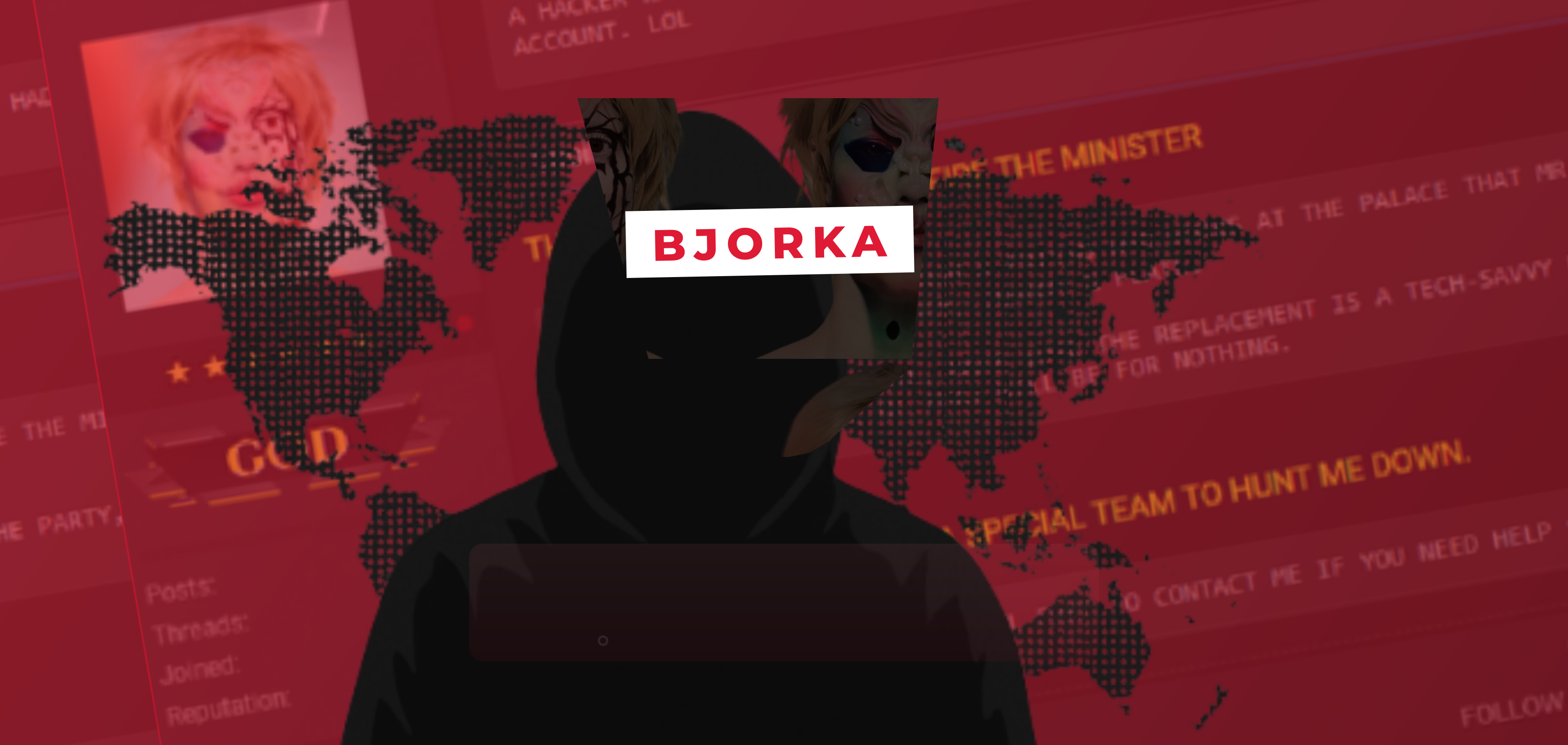
The Long Shadow of Bjorka: Inside Indonesia's Battle for Cyber Sovereignty
Prologue: The Phantom Returns
In the dim corners of Indonesia's digital world, one name still echoes: Bjorka. For many, it is more than an alias - it has become a symbol of fear, frustration, and fascination.
Three years after the initial breaches, a new leak in September 2025 reignited old anxieties. Over 341,000 personal records tied to Indonesian National Police personnel surfaced online. Names, ranks, service numbers, and emails were exposed and quickly circulated across Telegram channels and dark web repositories.
The Origins of a Digital Specter
Bjorka first emerged in 2022 with a cascade of leaks implicating public institutions - from the Election Commission to key ministries and state-owned firms. Each release combined raw data and mocking commentary directed at officials.
The Arrest and the Retaliation
On September 23, 2025, Jakarta police announced the arrest of a 22-year-old man (initials WFT) in North Sulawesi accused of operating accounts linked to the Bjorka identity. Press briefings declared progress, but within days new data surfaced that suggested deeper failures.
The Methods Behind the Mask
Forensic work shows a consistent pattern: opportunistic exploitation of misconfigurations, repackaging of older datasets, use of anonymous platforms, and targeted psychological provocation.
- Exploiting open doors - misconfigured APIs and legacy services left exposed.
- Recycling old data - combining previous leaks with new elements to maximize impact.
- Anonymous channels - Telegram and dark web forums for staging and distribution.
- Psychological warfare - timed releases to undermine confidence and shape public narrative.
The Fallout - Trust Eroded
The scale of the leak amplified risks such as phishing, identity fraud, and targeted social engineering against police personnel and their contacts. Official statements claiming 'core systems' were intact did little to calm public concern.
Systemic Weaknesses Exposed
Analysts point to recurring issues: absence of unified standards, weak enforcement, low operational cyber literacy, and fragmented incident coordination.
| Aspect | Key Action |
|---|---|
| Technology | Regular penetration testing, full data encryption, and multi-factor authentication on critical systems. |
| Human Factor | Mandatory cybersecurity training, credential rotation, and phishing simulations. |
| Organization | Establish internal CSIRT units and connect them with national frameworks (BSSN). |
| Policy | Full implementation of the Personal Data Protection Law (UU PDP) and an independent data protection authority. |
Lessons from the Breach
Experts call for a holistic program across technology, people, organization, and policy. Below is a concise checklist for immediate priorities.
- Immediate - Patch exposed systems and rotate high-risk credentials.
- Short term - Run enterprise-wide penetration tests and deploy endpoint detection.
- Medium term - Build CSIRT teams and integrate incident playbooks with national bodies.
- Long term - Enact and enforce PDP regulations, fund continuous education and audits.
When Data Becomes a Weapon
Bjorka's attacks show how data can be turned into leverage. The breaches amplified public debate on accountability and control, creating a broader political effect beyond technical fallout.
Bjorka weaponized information to expose weakness and to challenge structures of authority.
Epilogue - A World Without Faces
As of October 2025, the identity behind Bjorka is still unresolved. Whether an individual or collective, the name has reshaped Indonesia's digital conversation. Cybersecurity is now central to national sovereignty, and the lessons from these events should reshape priorities at every level.
Sources: SOCRadar Cyber Threat Intelligence (2025), The Jakarta Post (October 4, 2025), VOI.id (September 27, 2025), Indonesia Business Post (October 5, 2025), Expert interviews (University of Indonesia, SAFEnet, independent analysts, 2025)